
Heel & Arch Pain
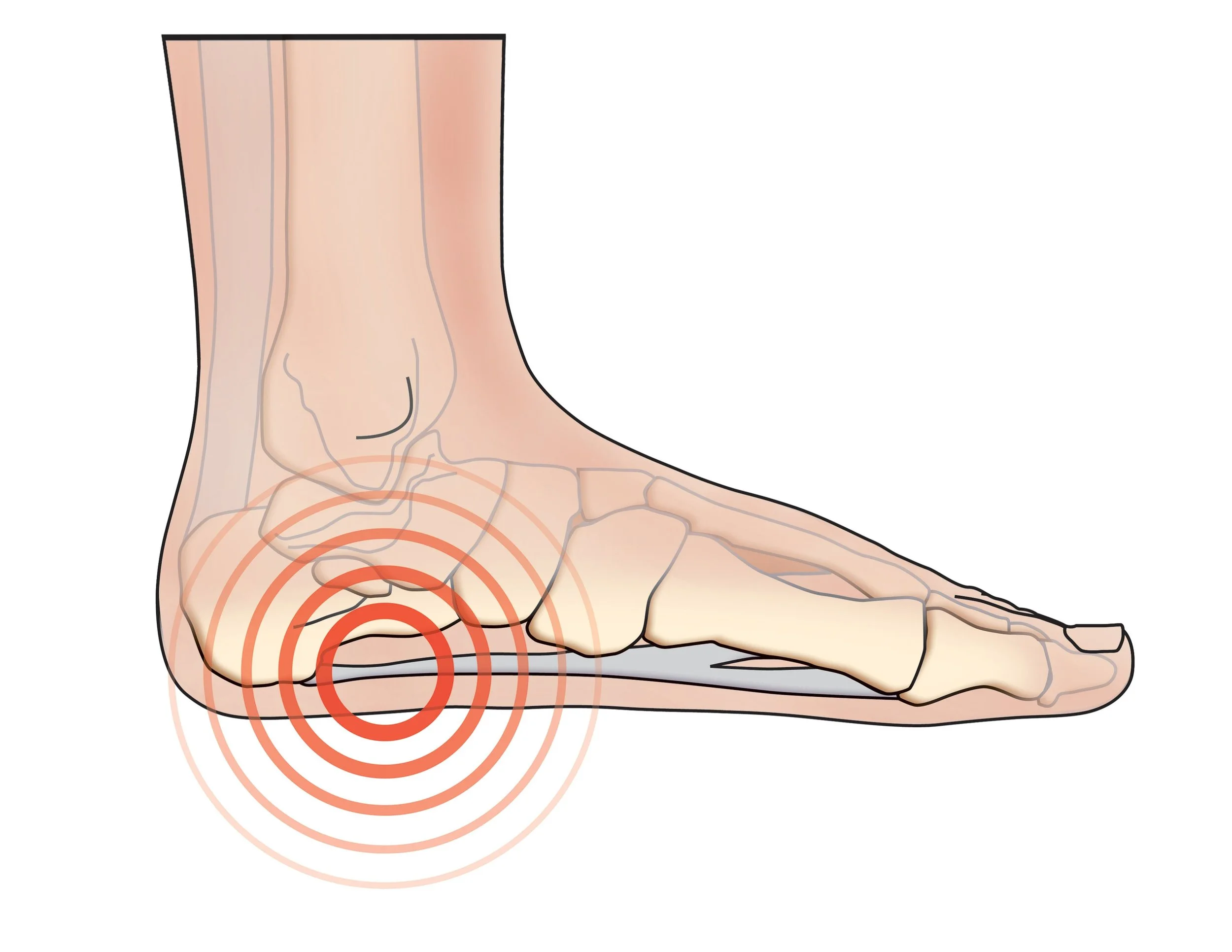
Plantar Fasciitis is the inflammation of the thick band of connective tissue, known as the plantar fascia, that runs across the bottom of your foot. This tissue connects your heel bone to your toes and creates the tension that supports your foot's natural arch.
Plantar Fasciitis

Symptoms
Pain, soreness, tenderness, stiffness or aching in the Achilles tendon
Custom Orthotics, Extracorporeal Shockwave Therapy, Supportive Footwear, Medical Foot Care, Night Splints

Treatment
What is Plantar Fasciitis?
The plantar fascia acts like a shock-absorbing bowstring. It is a resilient, fibrous band that maintains the structural integrity of your medial longitudinal arch. When you walk or run, this band stretches to absorb the impact of your body weight. Plantar Fasciitis occurs when the "bowstring" is subjected to too much tension or repetitive stress. This results in micro-tears in the collagen fibers. If the rate of injury exceeds the body’s ability to repair the tissue, the area becomes inflamed and painful, leading to the condition known as Plantar Fasciitis. Left untreated, it can lead to the development of heel spurs—bony growths that form where the fascia attaches to the calcaneus (heel bone)—as the body attempts to protect itself from the constant pulling of the ligament.
What can cause Plantar Fasciitis?
At Active Arches, we view Plantar Fasciitis as a biomechanical failure. While "overuse" is the general term, the root causes are often more specific:
Biomechanical Instability: Flat feet (overpronation) or high arches (supination) change the way weight is distributed, putting extra stress on the fascia.
Inadequate Footwear: Wearing flat shoes, flip-flops, or worn-out sneakers that lack a firm heel counter and arch support.
Sudden Increases in Activity: Rapidly increasing the intensity or duration of running or walking.
Occupational Stress: Jobs that require long hours of standing or walking on hard surfaces (concrete or tile).
Tight Calf Muscles: Limited flexibility in the Achilles tendon and calf muscles prevents the ankle from flexing properly, forcing the plantar fascia to overstretch.
What are the symptoms of Plantar Fasciitis?
First-Step Pain: Intense pain in the morning that feels like a needle in the heel.
Post-Rest Stiffness: Pain that flares up when standing up after a period of rest.
Tenderness to Touch: Sharp pain when pressing on the inner bottom of the heel bone.
Dull Ache: A consistent, throbbing ache that persists after a long day of activity.
Swelling: Mild inflammation around the heel area.
Risk factors for causing Plantar Fasciitis
Several factors can increase your likelihood of developing this condition:
Age: It is most common between the ages of 40 and 60.
Foot Mechanics: Having an abnormal gait or structural foot type.
Obesity: Extra weight puts increased mechanical strain on the plantar fascia.
Improper Training: Engaging in high-impact activities without proper progression or stretching.
How do you treat Plantar Fasciitis?
Our goal is to resolve the inflammation while correcting the underlying cause. Active Arches provides a multi-phase treatment plan:
Immobilization and Support: We use custom-made orthotics to provide a "functional correction" that prevents the arch from collapsing and the fascia from overstretching.
Advanced Technology: We utilize Extracorporeal Shockwave Therapy (ESWT) to break down scar tissue and trigger a new healing response in chronic cases.
Mechanical Therapy: Night splints are often prescribed to maintain a gentle stretch on the fascia and calf muscles overnight, reducing the "first-step" pain in the morning.
Taping and Padding: Kinesiology taping can provide immediate temporary relief by offloading the tension on the ligament.
Footwear Prescription: We guide you toward footwear with the appropriate "flex point" to ensure your shoes are working with your feet, not against them.
How can I prevent Plantar Fasciitis?
Prevention is centered on maintaining flexibility and support. Daily stretching of the calves and the bottom of the foot is essential. Maintaining a healthy weight and replacing athletic shoes every 500–800 kilometers (or every 6–12 months) ensures your feet have the cushioning they need. Most importantly, never ignore the first signs of heel pain; early intervention is the key to preventing a chronic condition.
Stop managing discomfort and start your recovery.
Book an appointment today and get a comprehensive assessment.
Frequently Asked Questions
-
We offer a range of solutions designed to meet your needs—whether you're just getting started or scaling something bigger. Everything is tailored to help you move forward with clarity and confidence.
-
The waves are sound waves, not electric waves, rendering it quite safe.
-
Getting started is simple. Reach out through our contact form and we’ll walk you through the next steps and answer any questions along the way.