
Hammer Toe
Toes that curl or bend into unnatural positions are among the most common structural deformities . While often grouped under the term "Hammertoe," these conditions include Claw Toe and Mallet Toe. These deformities are typically progressive, starting as flexible imbalances that can be managed conservatively, but eventually becoming rigid bony changes that may require interventional care.
Hammer Toe, Claw Toe, Mallet Toe

Symptoms
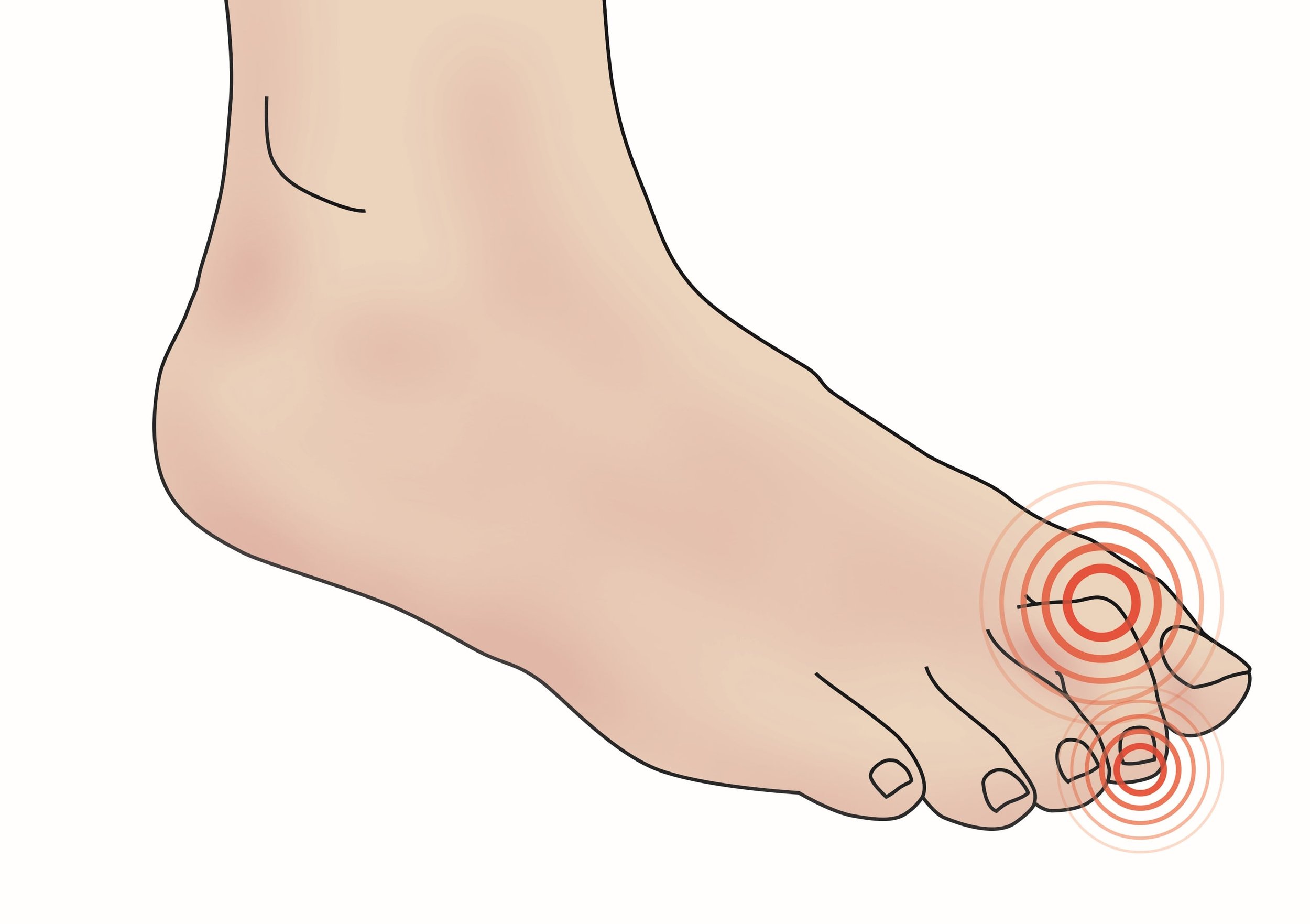
Toes curled downward in a "claw" appearance; painful rubbing against the top of footwear; hard skin (corns) forming on the toe joints; and redness, swelling, or burning sensations

Treatment
Medical Foot Care (Corn Removal), Custom Orthotics, Tenotomy (Minor Procedure), Orthopedic Footwear, Injection Therapy, Surgical Referral.
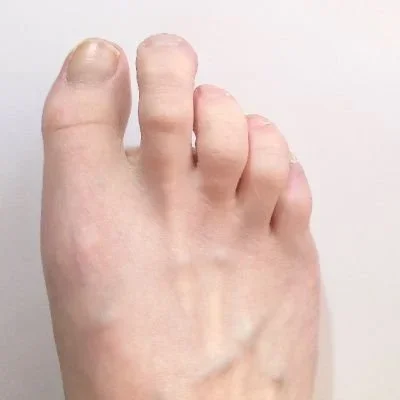
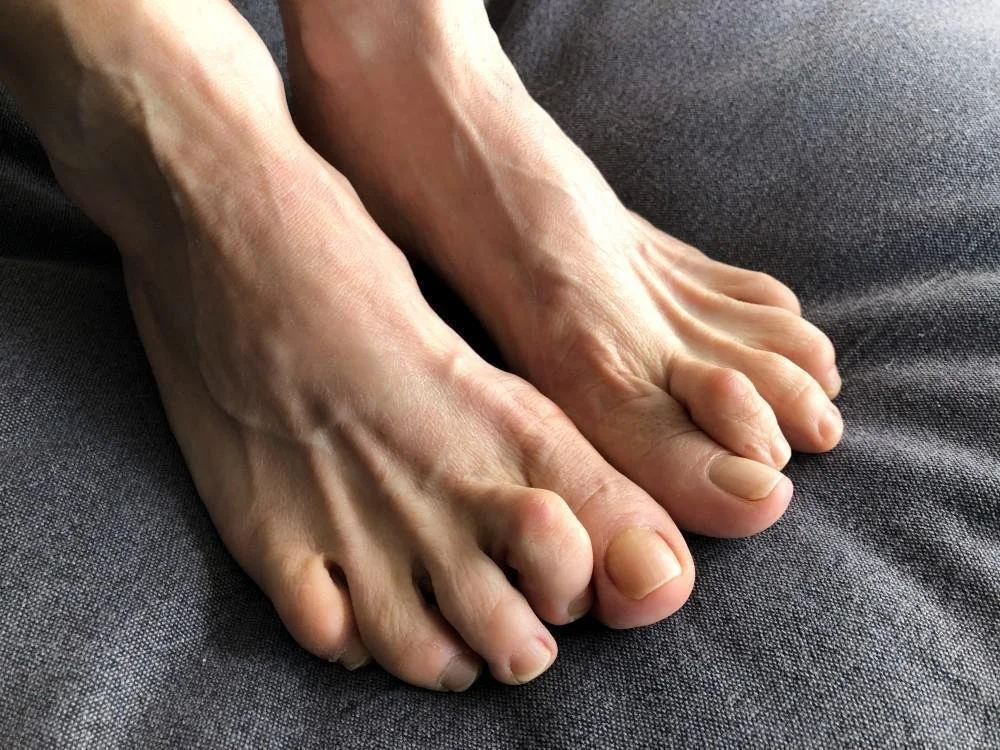
What are Hammertoes, Claw Toes, and Mallet Toes?
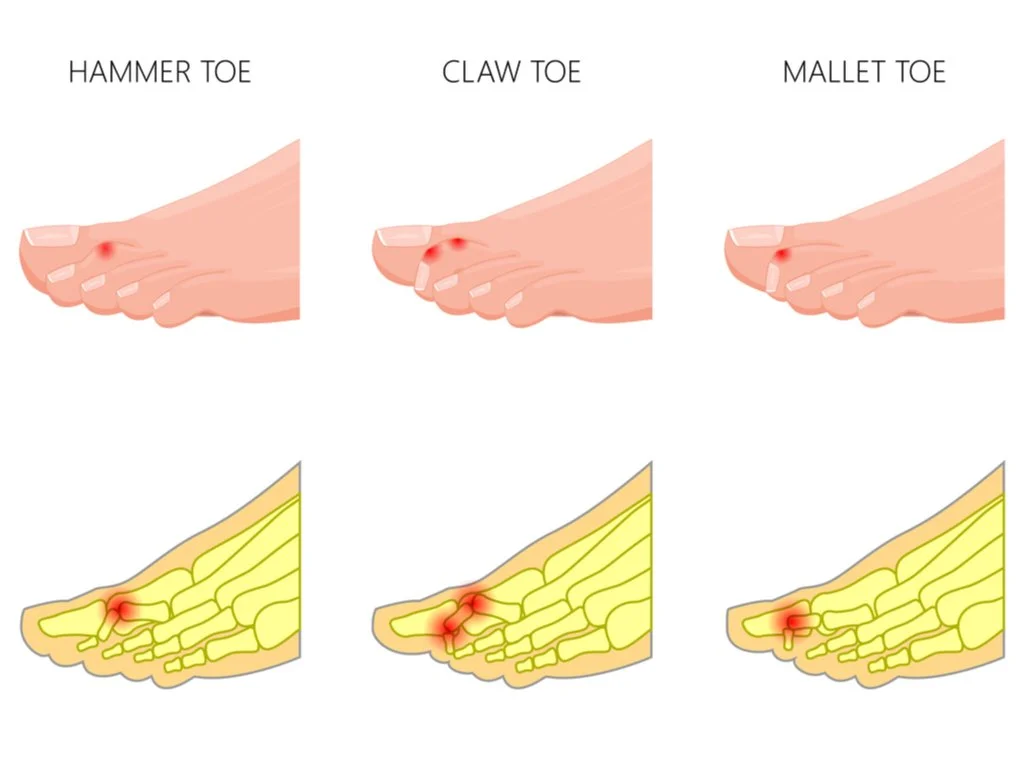
These conditions are categorized by which joint in the toe is "buckling":
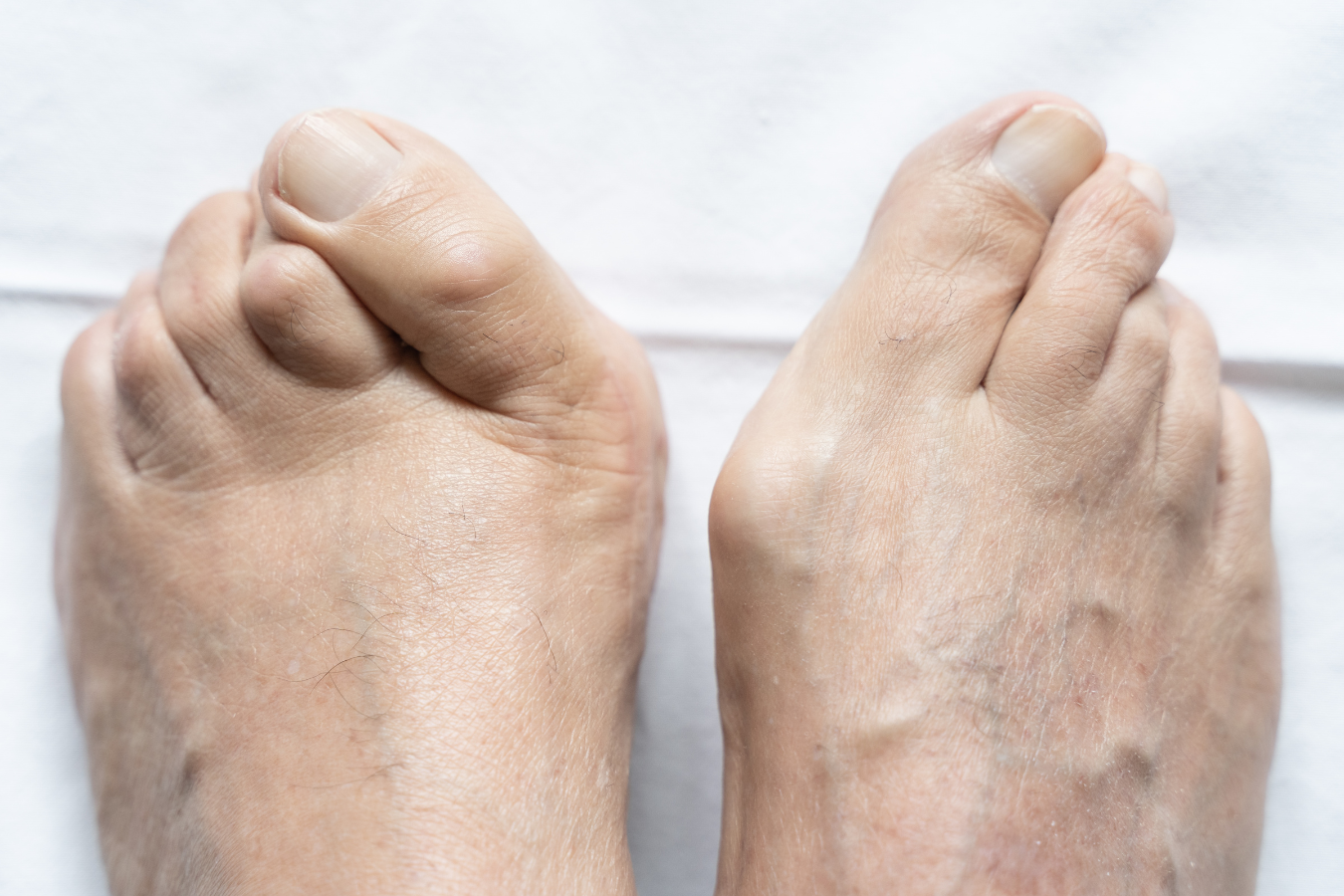
Hammertoe: The middle joint (PIP joint) of the toe bends downward. This is most common in the second toe, especially if it is longer than the big toe.
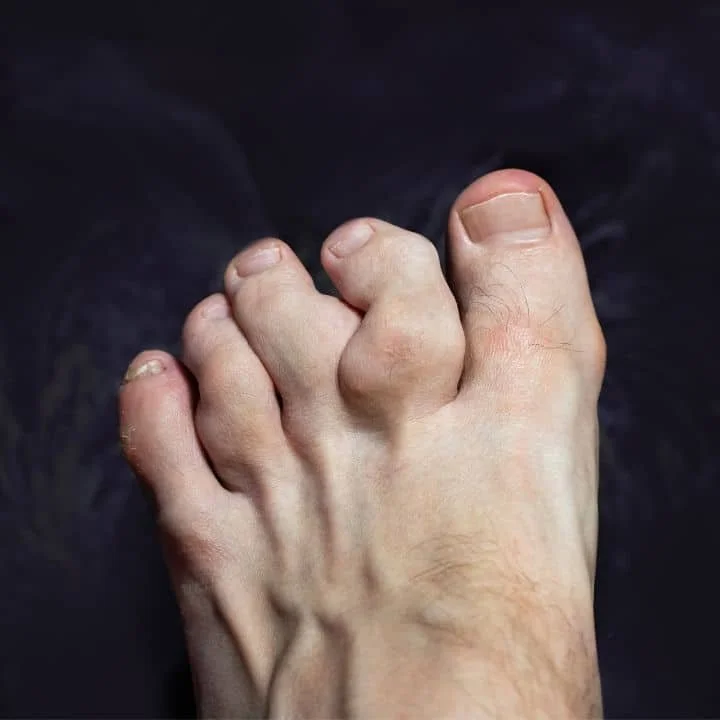
Claw Toe: All three joints of the toe bend, causing the toe to curl toward the sole of the foot. This often affects all four small toes simultaneously.
Mallet Toe: Only the joint closest to the tip of the toe (DIP joint) bends downward, often caused by the toe repeatedly hitting the end of a shoe. In the early stages, these toes are "flexible," meaning they can still be straightened manually. Over time, the tendons tighten and the joints become "fixed" or rigid, making conservative relief much more difficult.
What can cause these toe deformities?
The root cause is almost always a muscle or tendon imbalance. When the tendons that pull the toes downward become stronger than the muscles that keep them straight, the toe begins to buckle.
Poor Biomechanics: Conditions like flat feet or high arches force the toe muscles to overwork to stabilize the foot, leading to contractures.
Ill-Fitting Footwear: Shoes that are too short, narrow, or have high heels force the toes into a cramped, flexed position for hours at a time.
Systemic Diseases: Diabetes and Charcot-Marie-Tooth (CMT) can cause nerve damage and muscle atrophy, while Rheumatoid Arthritis can cause the joints themselves to shift.
Trauma: A previous toe fracture or severe stubbing can damage the ligament "plate" under the joint.
What are the symptoms of toe deformities?
Friction Pain: The tops of the bent joints rub against the inside of your shoes, causing painful inflammation.
Corn and Callus Formation: To protect itself from friction, the skin thickens, creating painful corns on the knuckles or the tips of the toes.
Difficulty with Footwear: Finding shoes that accommodate the extra "height" of a curled toe becomes increasingly difficult.
Ulceration: In severe cases, especially for those with diabetes, the constant pressure can break the skin down into an open sore or ulcer.
How do you treat Hammertoes and Claw Toes?
At Active Arches, we focus on relieving pressure and restoring balance:
Medical Foot Care: We safely debride and remove painful corns and calluses that form on the high points of the toes.
Custom Orthotics: Orthotics can address the underlying biomechanical cause (like overpronation) to stop the progression of the deformity.
Tenotomy: For flexible toes, we can perform a minor, in-office soft tissue procedure to release the tight tendon and allow the toe to sit flat.
Injection Therapy: Corticosteroid injections can be used to reduce acute inflammation and pain in a flared joint.
Orthopedic Footwear: We prescribe shoes with a deep toe box to ensure there is no contact between the toes and the shoe upper.
When is surgery necessary?
Conservative treatment is most effective when the toes are still flexible. If the deformity has progressed to a rigid state where the bone is fixed in a bent position, or if chronic open sores are present, surgery may be necessary. We work with orthopedic surgeons and podiatrists to determine the best surgical procedure to realign the bone and restore the toe's function.
Stop managing discomfort and start your recovery.
Book an appointment today and get a comprehensive assessment.