
Nerve Pain
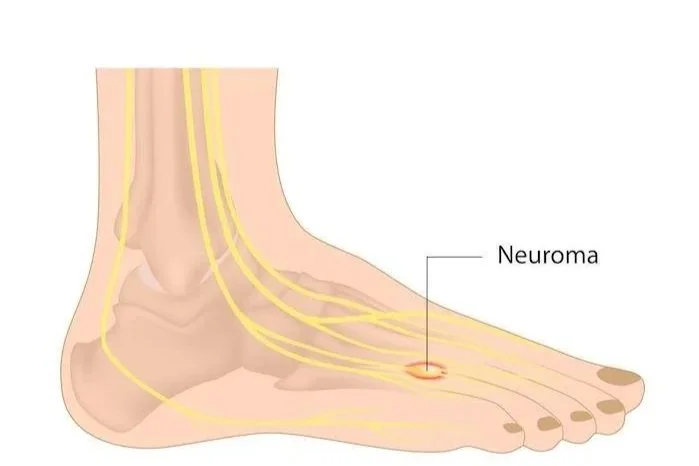
A neuroma is a painful condition characterized by the thickening or inflammation of the nerve tissue in the foot. Most commonly occurring between the third and fourth toes (Morton’s Neuroma), this ailment results from the nerve being compressed or irritated and can significantly impact your mobility and comfort.
Neuroma

Symptoms
Sharp, burning pain in the ball of the foot; tingling or numbness in the toes; the sensation of stepping on a pebble or having a "bunched up" sock inside your shoe.

Treatment
Custom Orthotics, Corticosteroid Injections, Sclerosing Injections, Footwear Modification, Padding and Offloading.
What is a Neuroma?
In the foot, a neuroma develops when one of the digital nerves that run between the metatarsal bones becomes compressed. In response to constant irritation, the nerve sheath thickens to protect itself. This thickening takes up more space in the narrow channel between the toe joints, leading to further compression and a cycle of worsening pain. While a neuroma can occur between any two toes, the space between the third and fourth toes is the most common site due to the anatomical convergence of nerve branches in that specific area.
What can cause a Neuroma?
At Active Arches, we find that neuromas are almost always the result of mechanical pressure. Common causes include:
Constrictive Footwear: Narrow, pointed-toe shoes or high heels that squeeze the metatarsal bones together and force the toes into a cramped position.
Biomechanical Instability: Having flat feet or overpronation causes the foot to "splay" and shift, which can pinch the nerve during movement.
High-Impact Activity: Repetitive trauma from running, court sports, or occupations that require long hours of crouching or standing on hard surfaces.
Bony Deformities: Existing conditions like bunions or hammertoes can reduce the space available for the nerve, leading to irritation.
What are the symptoms of a Neuroma?
The "Pebble" Sensation: Many patients describe the feeling of a stone or marble stuck in the ball of their foot, even when barefoot.
Neuropathic Pain: A distinct burning, tingling, or "electric shock" sensation that radiates into the toes.
Numbness: A loss of feeling or a "dead" sensation in the two toes adjacent to the neuroma.
Temporary Relief: Symptoms often subside when removing footwear, massaging the foot, or avoiding the activity that triggered the flare-up.
How do you treat a Neuroma?
Our clinical objective is to "open up" the space between the metatarsals to relieve nerve compression.
Custom Orthotics: We design orthotics with integrated "Metatarsal Pads." These pads are strategically placed to lift and separate the metatarsal heads, immediately reducing the pinch on the nerve.
Injection Therapy: For acute pain, corticosteroid injections can rapidly reduce nerve swelling. In more persistent cases, alcohol sclerosing injections may be used to reduce the size of the neuroma.
Footwear Prescription: We guide you toward shoes with a wide toe box and lower heels to prevent the mechanical compression that causes the nerve to thicken.
Padding and Offloading: Temporary adhesive padding can be used to provide immediate relief while long-term custom devices are being manufactured.
How can I prevent a Neuroma?
The best way to prevent a neuroma is to ensure your shoes provide enough room for your feet to function naturally. Avoid footwear that tapers at the toes or features a heel higher than two inches for daily wear. If you have flat feet or a wide forefoot, early use of custom orthotics can maintain proper bone alignment and prevent the digital nerves from ever becoming irritated in the first place.
Stop managing discomfort and start your recovery.
Book an appointment today and get a comprehensive assessment.