
Plantar Warts
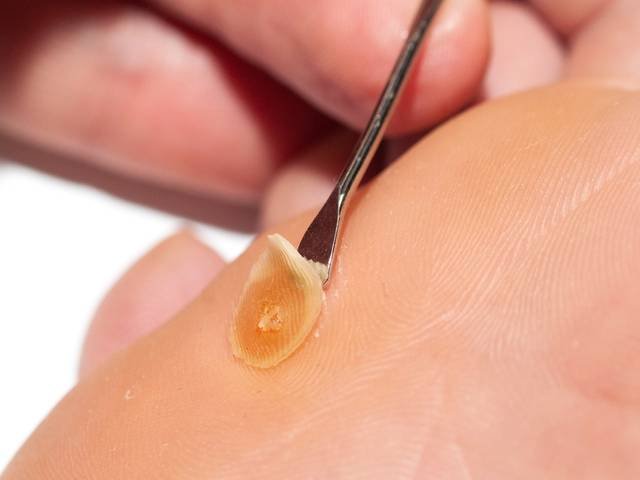
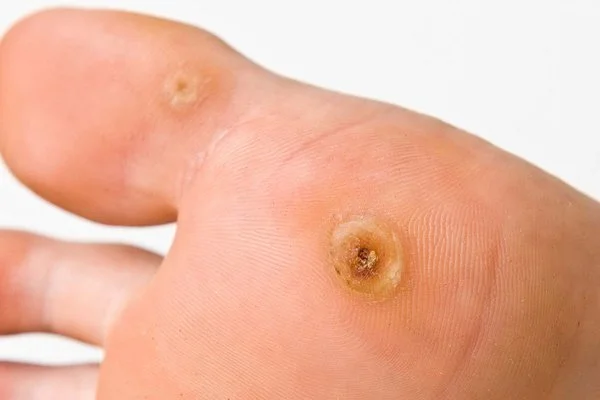
Plantar warts are a contagious viral infection of the epidermis. The virus thrives in warm, moist environments and enters the foot through microscopic abrasions. Once established, the virus "hijacks" the local blood supply to feed its growth—these are the tiny black dots often visible when the overlying hard skin is removed. Warts can appear as a single lesion or in clusters known as "mosaic warts." While some warts may resolve on their own as the immune system eventually recognizes the virus, many persist for years, growing larger and more painful without clinical intervention.
Verrucae Pedis

Symptoms
Pain, soreness, tenderness, stiffness or aching in the Achilles tendon

Treatment
Topical (caustic) medication, Surgical Excision, Needling, Custom Orthotics, Shockwave Therapy, Supportive Footwear, Medical Foot Care, Night Splints
What are Plantar Warts?
Plantar warts are a common viral infection of the skin on the soles of the feet. Unlike warts found elsewhere on the body, plantar warts are often forced inward by the pressure of standing and walking, causing them to develop beneath a thick layer of callus. Because the skin on the sole of the foot is the thickest on the body, these lesions can become deeply rooted and remarkably persistent without professional intervention.
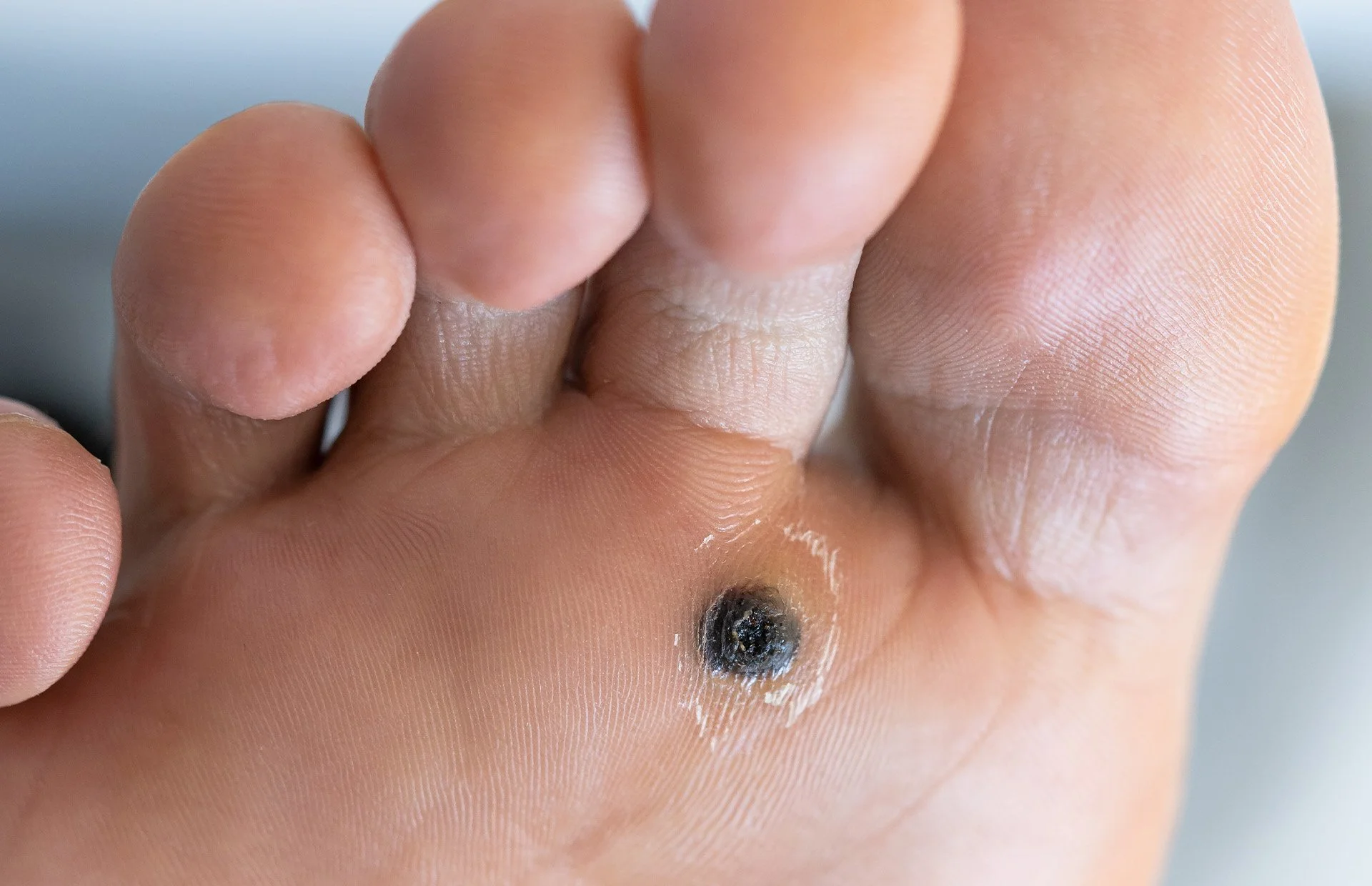
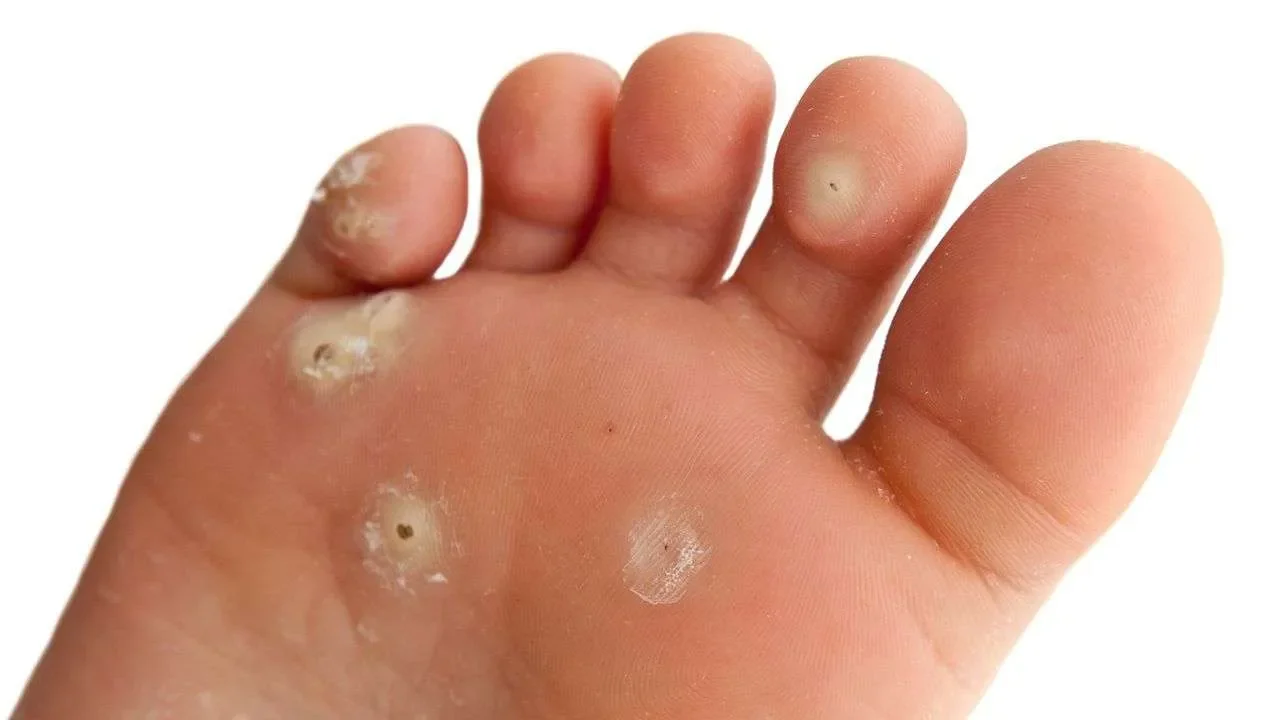
Solitary Warts
A single, clearly defined wart that often increases in size and may eventually multiply into "satellite" warts if left untreated.
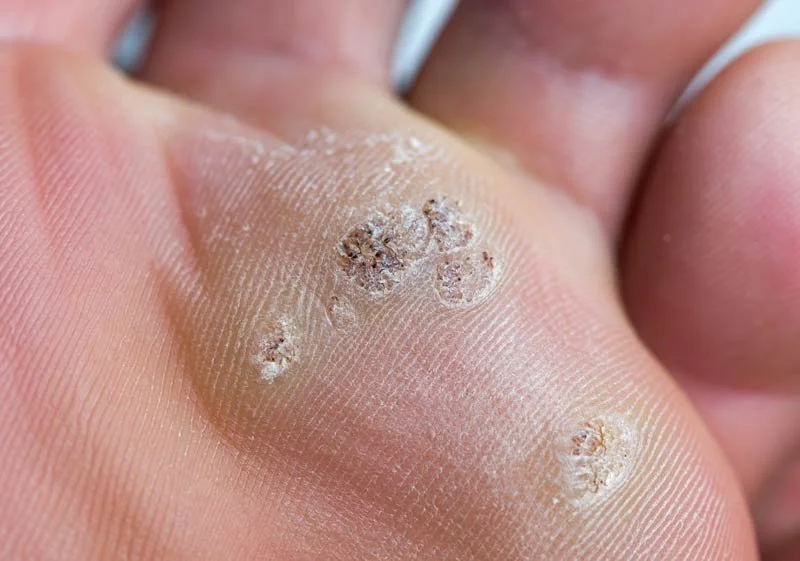
Mosaic Warts
A cluster of several small warts growing closely together in one area. These are typically more difficult to treat because they cover a larger surface area and are deeply integrated into the skin.
Calloused Warts
Because of their location on pressure points (like the heel or ball of the foot), many plantar warts are covered by a thick layer of skin, making them easily mistaken for a common corn or callus.
What can cause Plantar Warts?
Human Papillomavirus (HPV): Specifically, types 1, 2, 4, 60, or 63. The virus thrives in warm, damp environments and enters the skin through tiny invisible cuts or abrasions.
Public Environments: Walking barefoot in communal areas such as the Sherway Gardens area gym showers, local swimming pools, or yoga studios significantly increases the risk of contraction.
Weakened Skin Barrier: Excessive moisture (sweaty feet) or extreme dryness that causes skin cracking provides the perfect entry point for the virus.
Immune System Factors: Some individuals are naturally more susceptible to the virus than others. Children and teenagers are particularly prone as their immune systems have not yet built up a defense against these specific strains.
What are the symptoms to look for?
The "Squeeze" Test: Plantar warts are typically more painful when pinched from the sides than when pressed directly from the top (unlike a corn).
Interrupted Skin Lines: Look closely at the "fingerprints" on the bottom of your foot. A wart will break these lines, whereas a callus will allow the lines to continue through the growth.
Black Pinpoints: Often called "wart seeds," these are actually tiny clotted capillaries that have been drawn up into the wart.
Painful Weight-Bearing: A sensation like having a sharp pebble in your shoe, especially during the first steps of the morning or after long periods of standing.
How do you treat Plantar Warts?
Because the virus hides from the immune system, professional treatment is designed to trigger a localized immune response or physically destroy the infected tissue:
Medical-Grade Chemical Peel: We use concentrated salicylic acid or silver nitrate in strengths not available over-the-counter to break down the viral cells safely.
Cryotherapy: Controlled application of extreme cold to "freeze" the wart. This creates a small blister under the wart, causing it to slough off as the skin heals.
Debridement: Our chiropodists carefully trim away the overlying callus. This reduces immediate pain and allows topical treatments to reach the "heart" of the wart more effectively.
Immune Stimulation: In stubborn cases, we use treatments that irritate the area just enough to "alert" your body’s immune system to the presence of the virus so it can fight the infection from the inside out.
How can I prevent Plantar Warts?
Prevention focuses on hygiene and barrier protection. Always wear flip-flops or water shoes in public locker rooms and poolside areas. Avoid sharing shoes or socks with others, and keep your feet clean and dry. If you notice a suspicious growth, avoid picking at it, as this can spread the virus to other parts of your foot or to your hands. Early professional treatment at Active Arches is the best way to stop a single solitary wart from turning into a painful, multi-year mosaic infection.
Stop managing discomfort and start your recovery.
Book an appointment today and get a comprehensive assessment.