
Ball of Foot Pain
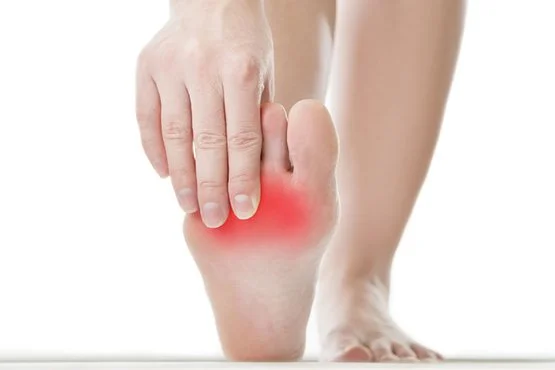
Metatarsalgia is a clinical term used to describe pain and inflammation occurring in the forefoot, specifically the area known as the ball of the foot. Because this area is subjected to significant mechanical load with every step, it is highly susceptible to overuse injuries and structural strain.
Metatarsalgia

Symptoms
Sharp, aching, or burning pain in the ball of the foot; a sensation of walking on a pebble; pain that intensifies during weight-bearing activities; and localized swelling.

Treatment
Custom Orthotics, Injection Therapy, Laser/Microwave Therapy, Supportive Footwear, Padding and Offloading.
What is Metatarsalgia?
Rather than a singular disease, metatarsalgia is a symptom of underlying biomechanical stress. The metatarsal bones are designed to distribute your body weight evenly across the forefoot. When this distribution is disrupted, one or more metatarsal heads are forced to absorb an excessive amount of pressure. This leads to the inflammation of the periosteum (the bone’s protective lining) and the surrounding soft tissues, including the joint capsules and ligaments. Over time, the protective fatty pad that cushions these bones can shift or thin out, leaving the area feeling bruised and making every step on a hard surface feel painful.
What can cause Metatarsalgia?
At Active Arches, we view metatarsalgia as a consequence of mechanical failure or environmental stress. Common causes include:
Excessive Pronation: When the arch rolls inward excessively, it causes the foot to "splay," placing abnormal pressure on the second, third, and fourth metatarsal heads.
Foot Structure Abnormalities: Conditions such as bunions or hammertoes shift the weight-bearing load away from the big toe and onto the smaller, more delicate metatarsal bones.
Improper Footwear: High heels shift weight forward onto the forefoot, while thin-soled or worn-out shoes fail to provide the necessary shock absorption.
Activity Spikes: Sudden increases in high-impact activities, such as running or jumping, without sufficient rest periods for tissue recovery.
Weak Intrinsic Muscles: When the small muscles of the foot are weak, they cannot support the metatarsal arch, leading to its collapse and subsequent inflammation.
What are the symptoms of Metatarsalgia?
Localized Aching: A persistent dull ache or sharp "stabbing" pain located directly under the base of the toes.
The "Pebble" Sensation: A very common complaint where patients feel as though their sock is bunched up or there is a stone in their shoe.
Aggravation by Surface: Pain that is significantly more manageable in cushioned sneakers but becomes unbearable when walking barefoot on tile or hardwood.
Radiating Discomfort: In some cases, the inflammation can irritate local nerves, causing tingling or "electric" sensations that shoot into the toes.
How do you treat Metatarsalgia?
Our goal is to offload the painful joints and resolve the underlying inflammation:
Custom Orthotics: We design orthotics with a "Metatarsal Bar" or "Metatarsal Pad." These modifications lift the bones just behind the joint, effectively shifting the pressure away from the painful area.
Advanced Modalities: Laser or Shockwave Therapy can be utilized to penetrate deep into the tissue, stimulating cellular repair and reducing chronic inflammation.
Injection Therapy: For acute, debilitating pain, a corticosteroid injection can provide rapid relief by calming the inflamed joint capsule.
Footwear Prescription: We recommend shoes with a wide toe box and a "rocker-sole" geometry, which helps the foot roll through a step without putting excess strain on the forefoot.
How can I prevent Metatarsalgia?
Prevention centers on protection and strength. Ensure your footwear has adequate cushioning in the forefoot and replace athletic shoes every 500–800 kilometers. Incorporating foot-strengthening exercises (like towel scrunches or toe spreads) helps maintain the integrity of the metatarsal arch. Finally, listen to your body: if the ball of your foot begins to feel bruised, rest and ice the area immediately to prevent a minor irritation from becoming a chronic condition.
Stop managing discomfort and start your recovery.
Book an appointment today and get a comprehensive assessment.